Confidence first. Then the skill, then the habit.
Knowing what AI can do doesn't change much on its own. People need to feel able to try it, get good at it on their own work, use it when the week gets busy, and still be using it months later. Every session is built around those four steps.
- 1
Confidence
Plain English, nobody put on the spot, every question answered. People relax enough to have a go.
- 2
Capability
Brief it, let it work, check it. The 10-80-10 method, practised until it feels normal.
- 3
Application
Real tasks from your own team, worked in the room, so Monday morning looks familiar.
- 4
Lasting improvement
Things to come back to, and follow-up sized to the level you choose, to catch what's slipping.
People need to remember it, and use it again
A good day fades fast if nothing brings it back. So:
- We practise on their own tasks, not made-up examples, so the learning is tied to work they'll do again next week
- Everyone leaves with prompts and a reference card for the desk. Advantage and Flagship add a workbook, a debrief site and a team prompt library
- Follow-up while the habits are forming, to refresh what's fading and fix what's stuck
People need to see themselves as someone who can do this
Plenty of capable people have decided they're “not technical”. I was one of them. That belief often holds people back more than any gap in skill. So:
- A useful result early in the day, on their own work, so the first experience is a win
- Nobody exposed for not knowing. Mixed confidence in every room is normal
- Ground rules they agree themselves, so checking AI's work and owning it becomes part of how they work, not a rule handed down
What I can't promise is that everyone changes how they work. People and workplaces differ. What the training does is make the change easier to start, easier to remember and easier to keep going, and the follow-up is there to spot what hasn't stuck.
It was a great day. Part of my work involves a high level of manual data entry from handwritten documents, and Paul made it so easy to understand how to use Copilot to do the legwork for me. Paul is so knowledgeable and makes you feel at ease.
Workshop delegate, 2026
A half-day workshop, start to finish
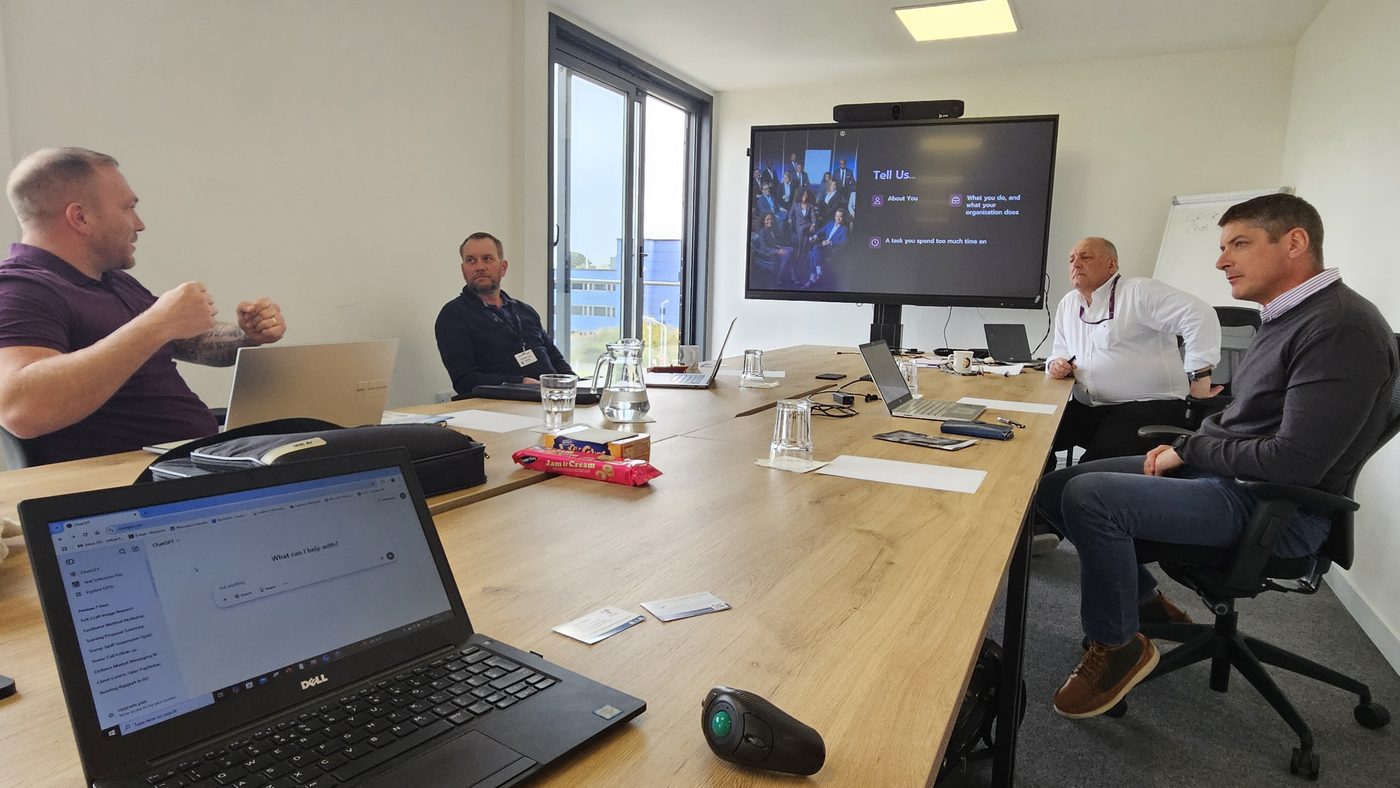
Every session is shaped around your team's own work, so the detail changes. The shape doesn't. This is the training day at the heart of every level of Practical AI for Your Team.
Welcome, and the first five minutes about 20 min
Everyone hears they won't be exposed or made to look silly. Then each person names one task that eats their time.
AI in plain English about 30 min
What it is, what it isn't, and why it sounds so sure of itself when it's wrong.
Your problem, solved live about 40 min
We take a real task from the room and work it on screen, refining as we go, so everyone sees the method rather than a trick.
Hands on about 30 min
In pairs, on your own work, with me at your shoulder. Everyone leaves having done something real.
Which tool for which job about 30 min
ChatGPT, Copilot, Claude, NotebookLM and Gamma: where each one earns its place, and which one you probably already pay for.
Safe use and next steps about 15 min
What never goes into an AI tool, what to check before anything goes out under your name, and one commitment each.
What your team keeps
- Prompts built around your own tasks, ready for Monday morning
- Safe-use ground rules the whole team has agreed
- A quick-reference card for the desk, and with Advantage and Flagship, a workbook each
- A follow-up email with what we covered and your next steps
- With Advantage and Flagship: a private debrief site with every question answered and your prompt library, like the one built for ASG
Exactly what you get depends on the level you choose. We agree it before the day.
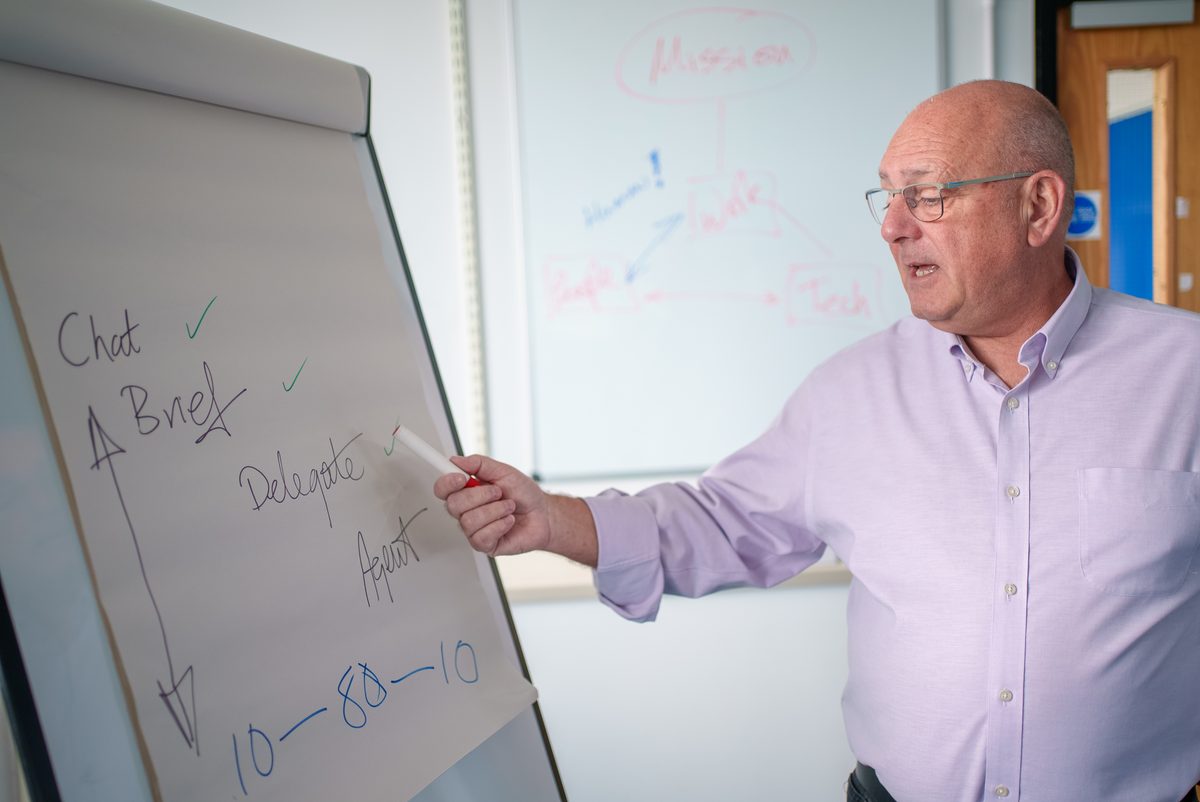
The 10-80-10 rule
A simple way to remember where the effort goes when AI is used well. It's the first thing taught on every Bravo Zulu workshop, and teams tell us it changes how they use AI.
The quality of your AI is the quality of your questions.
More along the lines of unlearning. Very enlightening to use AI as a method to get the best out of myself, rather than asking questions that never quite get me to the answer I'm looking for.
Workshop delegate, 2026
The numbers are a memory aid, not a rule. How much checking a task needs depends on what it is and what's riding on it. A quick social post might need a read-through. A bid, a safety report or anything with client data needs far more than 10%. What doesn't change: AI helps with the work, and people stay responsible for it.
10%: brief it properly
Tell the AI what you want, who it's for, and what good looks like. Thirty seconds of briefing is the difference between a generic, slightly-wrong answer and a usable one.
80%: let it work
The draft, the analysis, the first version. This is where AI earns its keep, and where your time comes back.
10%: check it and own it
AI will sound completely confident about something completely wrong. The last 10% is reading it, fixing it, and putting your name to it. Skip this and you're not saving time, you're shipping mistakes faster.
The 10% brief, ready to copy
Paste this into ChatGPT, Copilot or Claude before your next piece of writing, and fill in the brackets.
I need help with [the task]. It's for [who will read it]. Good looks like [length, tone and format]. Before you start, ask me up to three questions about anything you need to know.
That last line is "the quality of your questions", working the other way round.
The London to New York rule
A jumbo jet flying from London to New York spends most of the trip slightly off its line. It still lands where it should, because the crew know exactly where they're going and keep correcting. Working with AI is the same: know the destination, brief it, then correct as you go. If you know where you're going, you've got a good chance of getting there.
Three questions every team learns to answer
AI is only worth having if it doesn't create new problems. Every session covers the same three things, in plain English, whatever tools you use.
What goes in?
We agree what's fair game to put into an AI tool and what never is: client details, personal data, anything commercially sensitive. Your team leaves knowing which tools your business has approved, with the ground rules on one page.
What comes out?
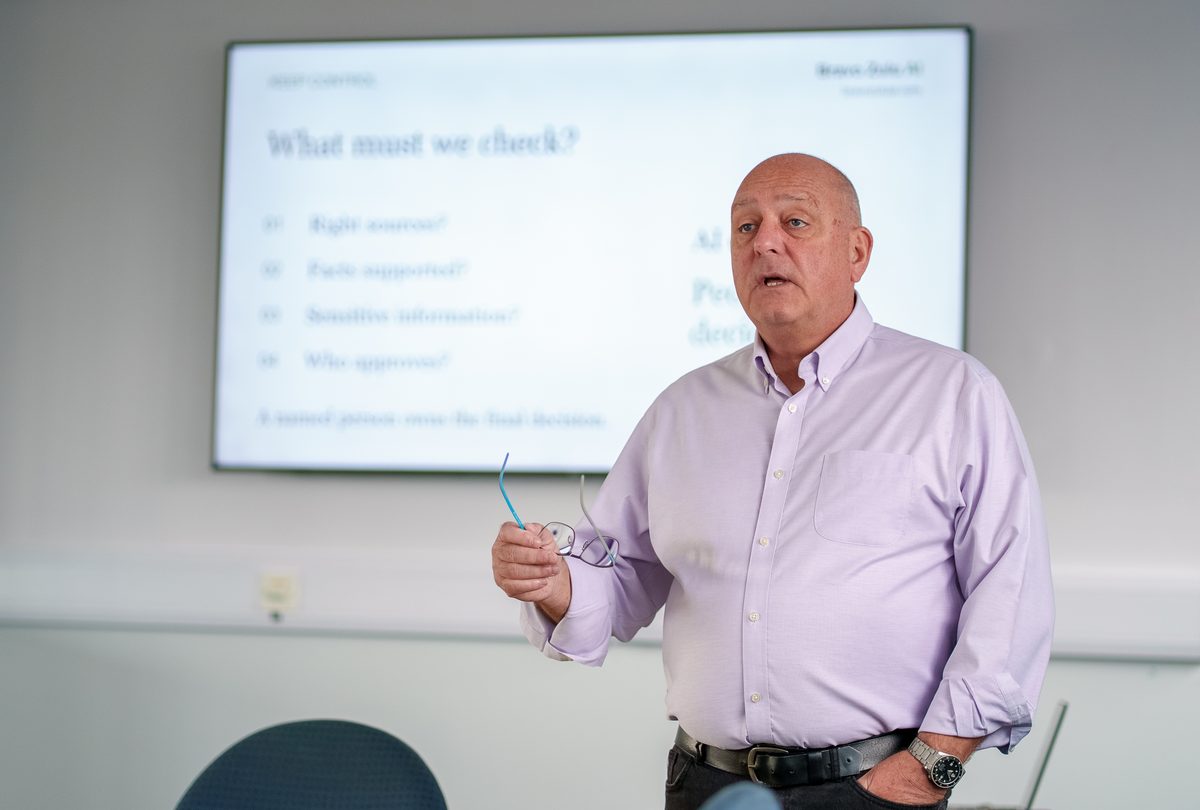
AI sounds just as confident when it's wrong. Nothing goes out until someone has asked:
- Right sources?
- Facts supported?
- Anything sensitive in it?
- Who approved it?
Who owns it?
AI never owns the outcome. A named person signs off everything that goes out under your name, every time. It's the last 10% of the 10-80-10 rule, and it's the habit we build.
What I won't do is tell you a tool is "secure" or "compliant" without seeing your contracts, settings and data. That's a decision for you and your IT or data protection lead, and I'll help you ask the right questions.
For regulated teams: I can also set up a lightweight AI management system: an acceptable-use policy, a one-page register, risk and prompt-hygiene checklists, a staff brief and a manager guide. Useful groundwork if ISO/IEC 42001 is on your horizon. The one-page policy and register come with Flagship; the full set is quoted separately.
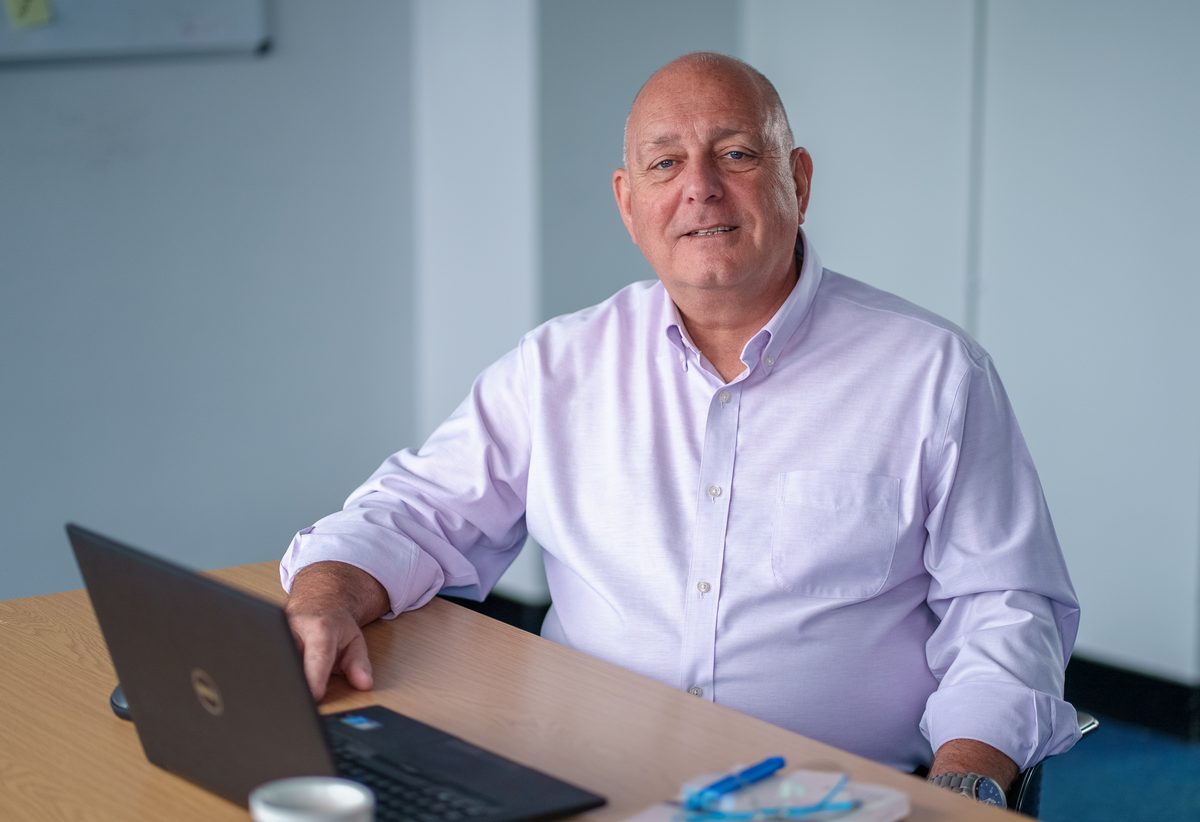
I couldn't really type. Now I build a website in eight minutes, by talking.
For most of my career I was the one in the room quietly struggling with IT. I never got on with spreadsheets. Then ChatGPT unblocked me, more or less overnight.
Not a coder, not a tech evangelist, but proof that a busy professional who found IT hard can get properly good at this. If I can, your team can.
What 40+ years in defence aviation means for you
- Human factors: how people learn and behave at work
- I know how people really behave under pressure, and how they actually learn. So the habits I teach are built for a busy Monday, not a perfect day.
- Explaining safety systems and regulation to people who don't live in them
- Complex subjects in plain English, one step at a time. AI gets the same treatment.
- Leading and training teams of 20 to 200
- Sceptics, enthusiasts and everyone in between. People get confident without being embarrassed, and nobody gets left behind or put on the spot.
- MOD DE&S expert in reporting, compliance, governance and safety
- Good judgement, and a named person accountable for what goes out. Safe use is part of the method from the first minute, not something bolted on at the end.
- Quality and safety management
- Improve things without creating new risk: start small, test where being wrong is survivable, and keep only what earns its place.
- Fleet Air Arm engineer, then quality and safety manager
- Holds full SC security clearance for defence and government work
- Invited panellist, ICASS 2025 international conference: AI in aviation safety reporting
- Author of AI Without Betting the Business (2026) and Take Charge of Taking Risk (2025)
Hear me on the BattleLab Podcast
Why "Bravo Zulu"? It's the naval signal for "well done". That's what I want every team to hear about its first real win.
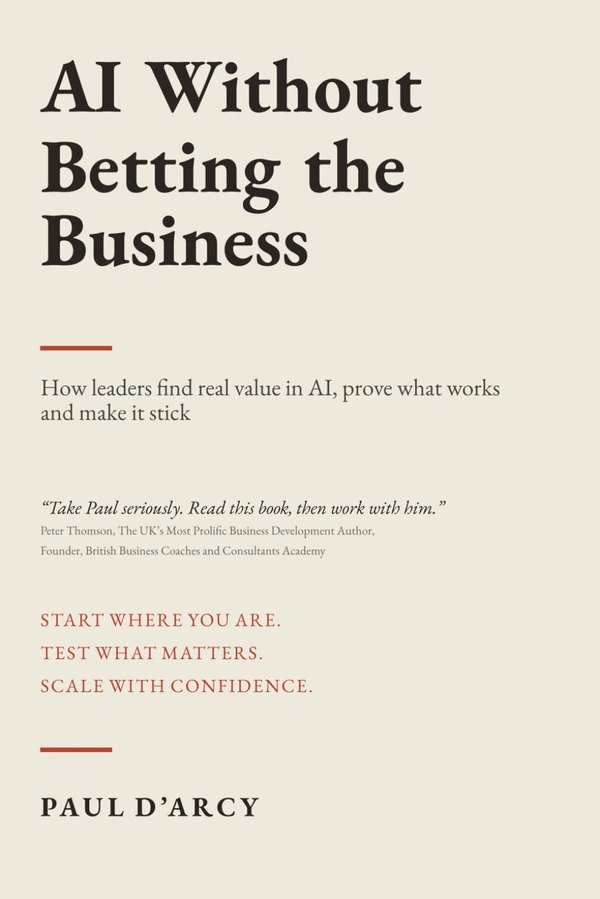
AI Without Betting the Business
How leaders find real value in AI, prove what works and make it stick
AI can be bought. Making it work must be earned.
A pilot goes well in the spring. By Christmas nobody is using it, and nobody quite says so. That isn't a technology problem. It is what happens when an organisation starts with the tool and works backwards to a use for it.
This book starts with your business instead. How to see the work you already do, choose one problem worth solving, test it where being wrong is survivable, and keep only what earns its place. No jargon, no reorganisation, and nothing you have to bet the company on.
Take Paul seriously. Read this book, then work with him.
Peter Thomson, the UK's most prolific business development author; Founder, British Business Coaches and Consultants Academy
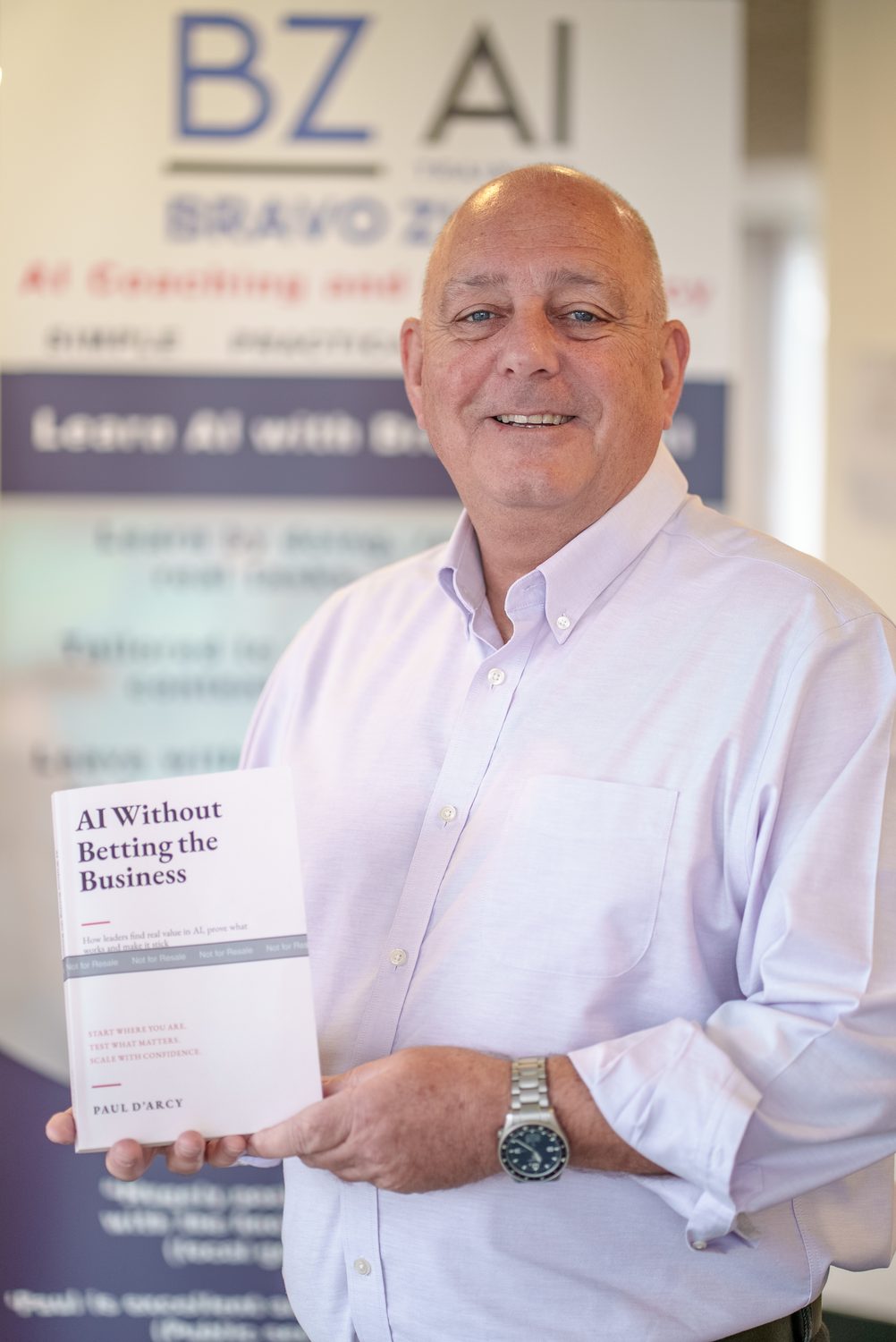
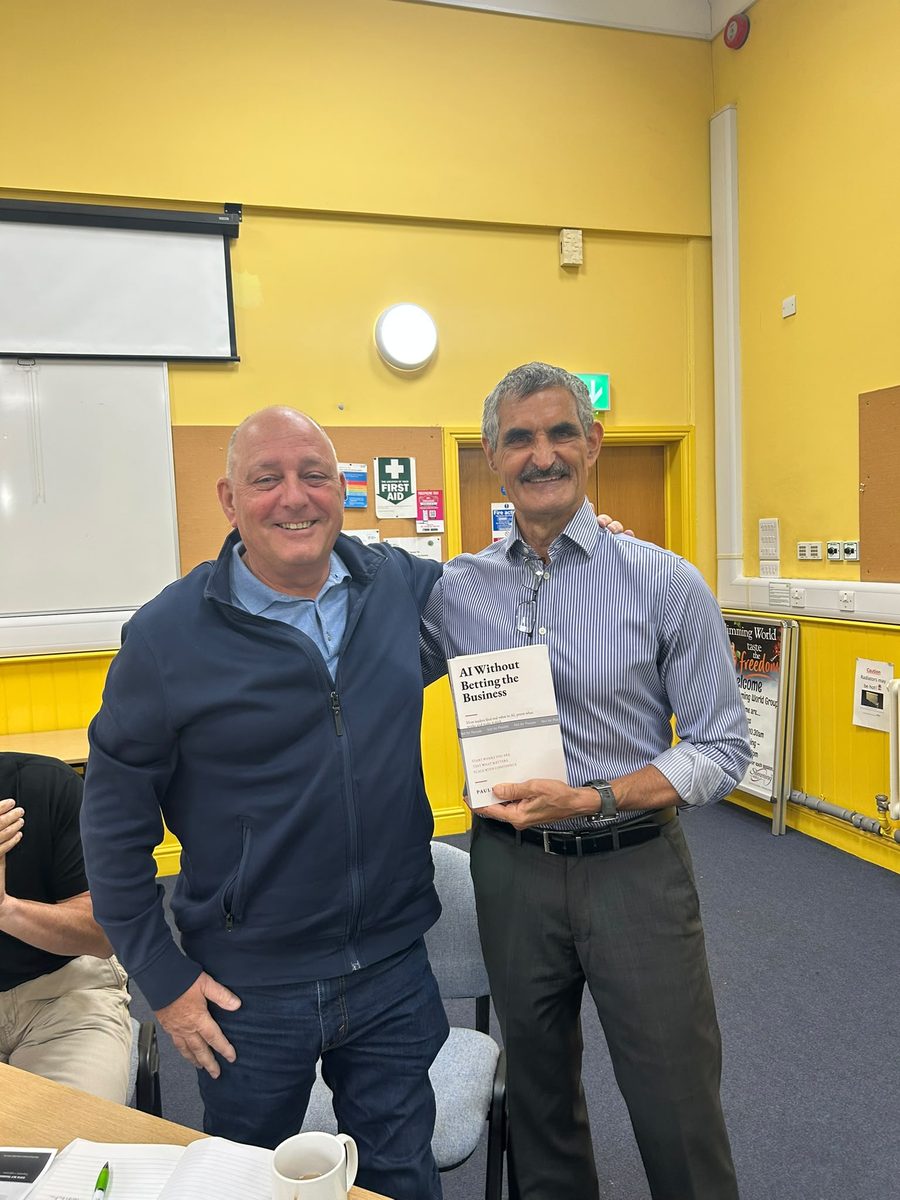
Leading a team? Have a call, and I'll post you a signed copy.
If you run a business or lead a team in the UK and you're weighing up what AI should do for you, book an AI Fit Conversation and I'll send you a signed copy afterwards. I post up to 10 a month, first come, first served. Why free? Because I'd rather you see how I think before you spend a penny.
Just mention it on the call.
Already read it? Two lines on Amazon helps other leaders find it.
More questions
We've already had an AI tool demo. Why would we need this?
A tool demo shows your team which buttons to press. That's an afternoon's content and almost anyone can deliver it. What changes how a team works is judgement: how to brief AI properly, how to check its output before it goes out under your name, and when to overrule it. Tools change every few months; judgement travels with the person. That gap is what our workshops are built around.
Will this take lots of our time?
No. We start with a few high-impact tasks that slot into existing workflows, then provide the prompts and templates so the wins stick. Delegates regularly tell us they used it on real work the very next day.
How do we measure the value?
Every engagement starts by agreeing what success looks like for you: time saved, quality, adoption, satisfaction. Flagship goes further: a short survey before we start, the same survey at 90 days, and a one-page before-and-after, so the benefit is evidenced rather than assumed.
Do we need to read your book first?
No. The training stands on its own. The book is for leaders who want the whole method in one place: how to choose the first problem worth solving, test it safely and decide what to keep. It's also a good way to see how I think before we talk.
Questions on cost, team size and the three levels are on the home page.
Start with one small win.
Thirty minutes on where AI could help your team, with no pressure either way. If your team takes part and the training doesn't give clear, practical value, tell me within 30 days and I'll refund it.
Book an AI Fit Conversation See the three levels of team training →